

Sleep Consistency: Why Going To Bed At The Same Time Matters More Than You Think
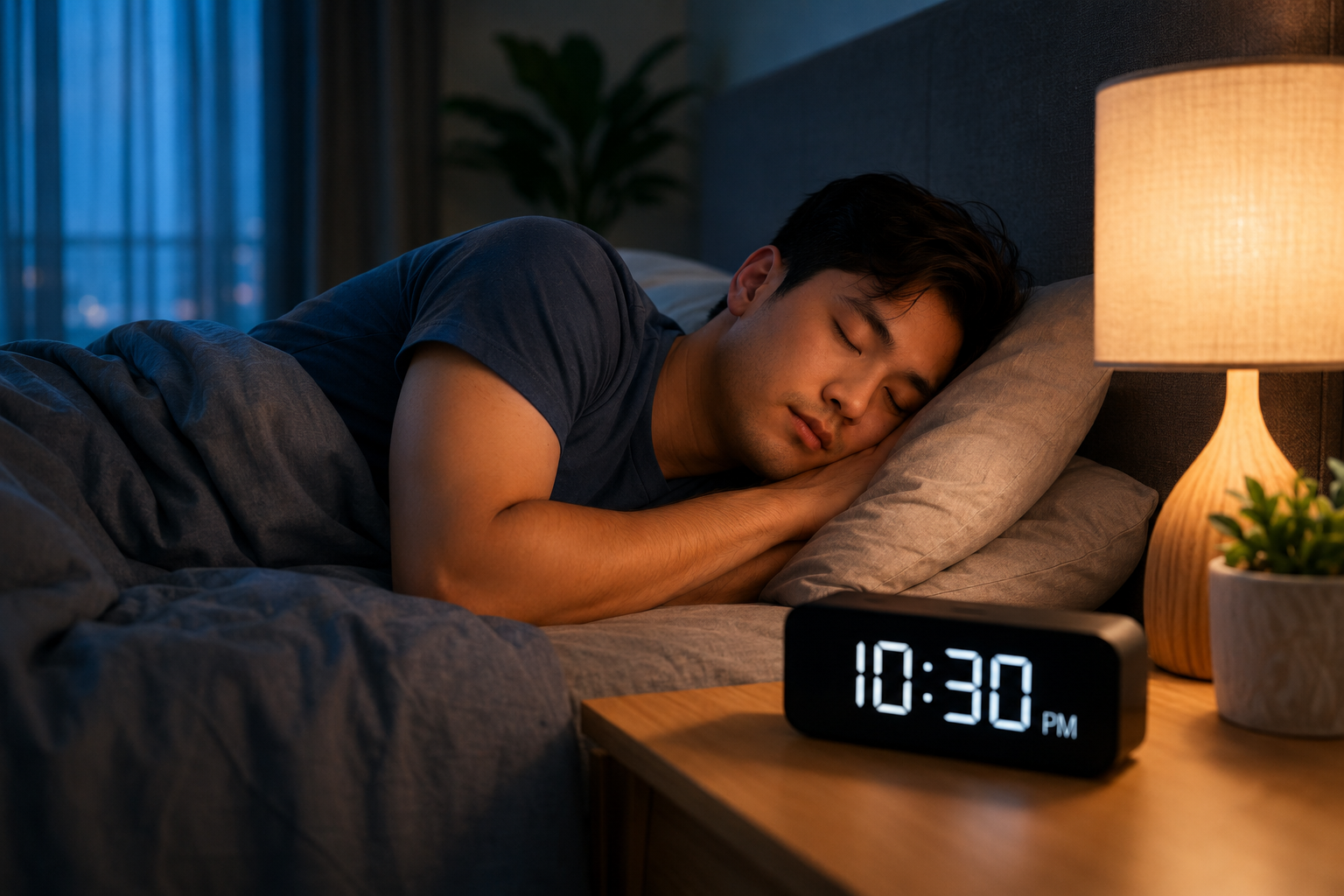
Most people focus on how many hours they sleep each night. While sleep duration is undeniably important, emerging research suggests that when you sleep—and how consistent your sleep schedule is—can have a profound impact on your overall health.
Your body operates on a built-in 24-hour clock known as the circadian rhythm. This internal timing system regulates hormone release, body temperature, digestion, immune function, and mental alertness. When your bedtime and wake-up time frequently shift, your circadian rhythm struggles to stay synchronized, even if you’re getting seven or eight hours of sleep each night (Zhao et al., 2022).
The encouraging news is that improving sleep consistency is one of the simplest lifestyle changes you can make to support long-term health.

Why your Body Prefers Routine
Think of your circadian rhythm as the conductor of an orchestra. Every organ system relies on this internal clock to function efficiently. Regular sleep schedules reinforce these biological rhythms, while irregular schedules create confusion throughout the body.
Researchers have found that consistent sleep timing is associated with improved cardiovascular health, better glucose regulation, enhanced cognitive performance, and improved emotional well-being—even after accounting for total sleep duration (Ye et al., 2022).
Simply put, sleeping from 11:00 p.m. to 7:00 a.m. every day is generally healthier than alternating between 10:00 p.m. one night and 2:00 a.m. the next, even if both schedules provide eight hours of sleep.
Your Heat Notices When Your Schedule Changes
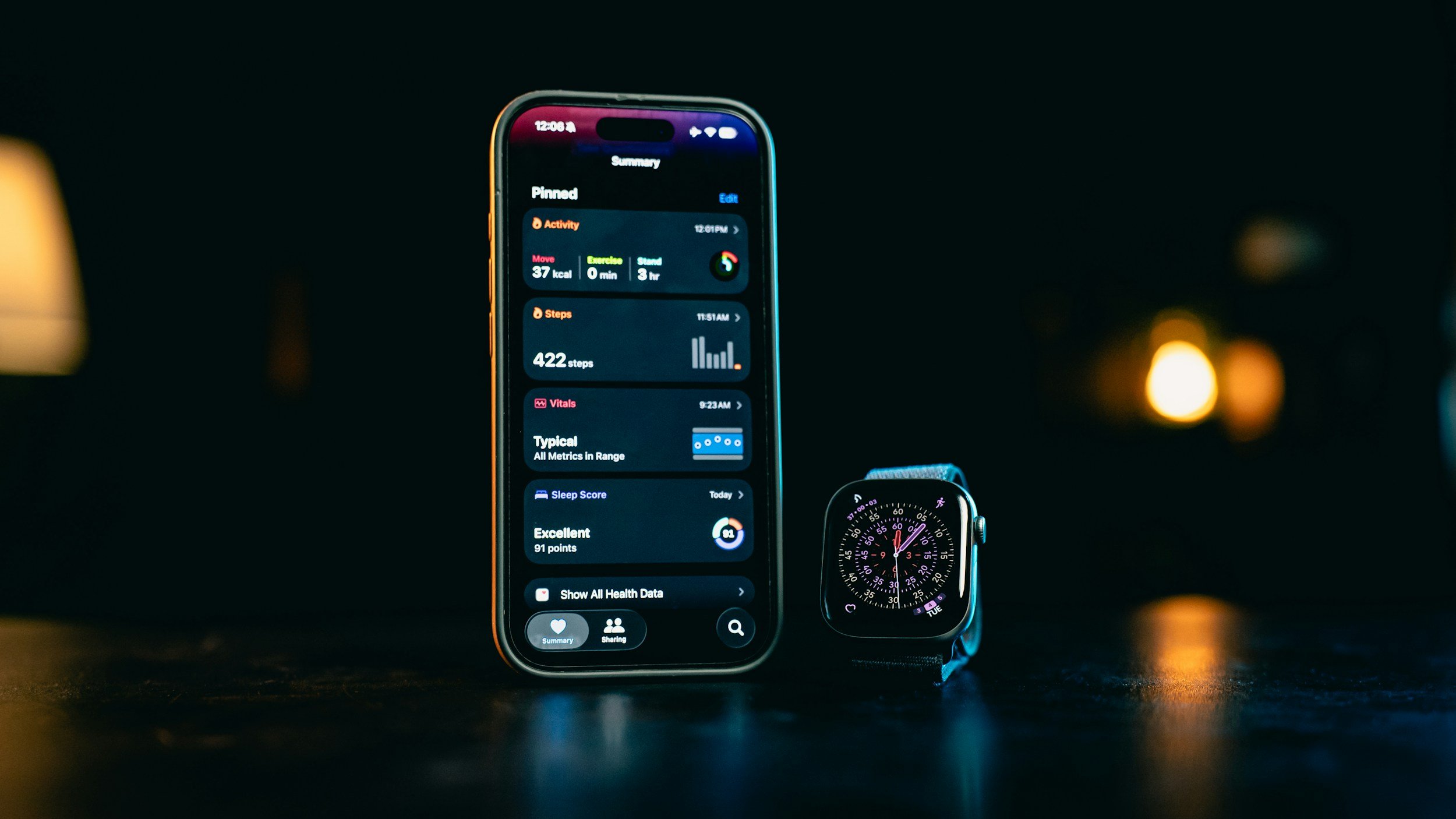
Heart disease remains one of the leading causes of death worldwide, and growing evidence suggests that sleep regularity plays a meaningful role in cardiovascular health.
In a prospective study involving more than 88,000 adults, researchers found that individuals with irregular sleep timing had a significantly greater risk of developing cardiovascular disease than those maintaining consistent bedtimes (Ye et al., 2022).
Sleep irregularity has also been linked with:
Elevated blood pressure
Increased resting heart rate
Chronic low-grade inflammation
Reduced vascular function
Scientists believe these effects occur because inconsistent sleep disrupts normal hormonal rhythms, increases sympathetic nervous system activity, and interferes with overnight cardiovascular recovery (Zhao et al., 2022).
Sleep Timing Influences Your Metabolism
Your metabolism follows a daily rhythm just like your sleep.
When your sleep schedule frequently changes, your body becomes less efficient at regulating blood sugar and insulin. Over time, this may contribute to insulin resistance and increase the risk of developing type 2 diabetes (Söderström et al., 2021).
Research has also shown that inconsistent sleep affects hormones involved in hunger regulation:
Leptin, which signals fullness, decreases.
Ghrelin, which stimulates appetite, increases.
These hormonal changes can increase cravings for calorie-dense foods and make weight management more difficult (Taheri et al., 2004).
This helps explain why individuals who frequently alternate between weekday and weekend sleep schedules often report increased fatigue, appetite, and difficulty maintaining healthy eating habits.

Your Brain Benefits From Predictability
Sleep is essential for memory, concentration, emotional regulation, and learning.
However, the brain doesn’t simply need enough sleep—it also benefits from sleeping at predictable times.
Irregular sleep timing has been associated with:
Reduced attention and focus
Slower reaction time
Increased anxiety
Higher rates of depressive symptoms
Reduced emotional resilience
Researchers studying circadian disruption have demonstrated that misalignment between internal biological clocks and daily schedules alters neurotransmitter function and may contribute to mood disorders (Kekäläinen et al., 2020).
Even relatively small shifts in bedtime over consecutive days can reduce alertness and impair decision-making.

Athletes And Active Individuals Recover Better With Consistent Sleep
Recovery doesn’t happen only during exercise—it largely occurs during sleep.
Growth hormone release, muscle repair, tissue regeneration, and immune recovery all peak during deep sleep.
Studies involving athletes have shown that regular sleep schedules improve:
Sprint performance
Reaction time
Accuracy
Endurance
Recovery following exercise
Conversely, irregular sleep patterns increase fatigue and reduce physical performance even when total sleep duration remains similar (Fullagar et al., 2015).
For anyone participating in recreational sports, resistance training, or rehabilitation after injury, maintaining a regular sleep schedule should be considered part of the recovery program.

Beware of Social Jet Lag
Many people follow one sleep schedule during the workweek and another on weekends.
This phenomenon is known as social jet lag.
Unlike travelling across time zones, social jet lag occurs because our biological clock shifts later on weekends before being forced back to an earlier schedule on Monday morning.
Research has associated social jet lag with:
Poorer sleep quality
Increased fatigue
Higher body weight
Impaired glucose metabolism
Greater cardiovascular risk
Even a bedtime difference of 60–90 minutes between weekdays and weekends appears capable of disrupting circadian rhythms (Wittmann et al., 2006; Depner et al., 2018).

Practical Ways To Build A More Consistent Sleep Schedule
You don’t need to become a perfect sleeper overnight. Small improvements can make a meaningful difference.
1. Keep a regular wake-up time.
Your wake-up time has the greatest influence on resetting your circadian rhythm.
2. Aim for a consistent bedtime.
Try to keep bedtime within 30–60 minutes every night, including weekends.
3. Get morning sunlight.
Exposure to natural light shortly after waking helps reinforce your biological clock.
4. Reduce evening screen exposure.
Blue light suppresses melatonin production, making it more difficult to fall asleep.
5. Avoid caffeine late in the day.
Caffeine can remain active in the body for several hours and delay sleep onset.
6. Create a relaxing bedtime routine.
Reading, stretching, meditation, or quiet music can signal to your brain that it’s time for sleep.

The Bottom Line
Improving your health doesn’t always require dramatic lifestyle changes. Sometimes the most effective interventions are also the simplest.
Maintaining a consistent sleep schedule supports your heart, metabolism, brain, immune system, and physical recovery. Rather than focusing solely on how many hours you sleep, pay attention to when you sleep—and aim to make that schedule as regular as possible.
A predictable bedtime may be one of the easiest investments you can make in your long-term health.
References
Depner, C. M., Melanson, E. L., McHill, A. W., Wright, K. P., Jr., & others. (2018). Ad libitum weekend recovery sleep fails to prevent metabolic dysregulation during a repeating pattern of insufficient sleep and weekend recovery sleep. Current Biology, 28(6), 957–967. https://doi.org/10.1016/j.cub.2018.01.069
Fullagar, H. H. K., Skorski, S., Duffield, R., Hammes, D., Coutts, A. J., & Meyer, T. (2015). Sleep and athletic performance: The effects of sleep loss on exercise performance and physiological responses. Sports Medicine, 45(2), 161–186. https://doi.org/10.1007/s40279-014-0260-0
Kekäläinen, T., Hämäläinen, H., Paulin, C., & Koskinen, A. (2020). Sleep regularity is associated with mental well-being: Evidence from the Finnish general population. Chronobiology International, 37(2), 241–250. https://doi.org/10.1080/07420528.2019.1707533
Söderström, M., Jedel, K., Ekstedt, M., & Åkerstedt, T. (2021). Irregular sleep and the risk of type 2 diabetes: A systematic review and meta-analysis. Diabetes Research and Clinical Practice, 177, 108900. https://doi.org/10.1016/j.diabres.2021.108900
Taheri, S., Lin, L., Austin, D., Young, T., & Mignot, E. (2004). Short sleep duration is associated with reduced leptin, elevated ghrelin, and increased body mass index. PLoS Medicine, 1(3), e62. https://doi.org/10.1371/journal.pmed.0010062
Walker, M. P. (2017). Why We Sleep: Unlocking the Power of Sleep and Dreams. Scribner.
Wittmann, M., Dinich, J., Merrow, M., & Roenneberg, T. (2006). Social jetlag: Misalignment of biological and social time. Chronobiology International, 23(1–2), 497–509. https://doi.org/10.1080/07420520500545979
Ye, L., Wang, Z., Cai, Y., Chen, Y., Liu, Y., & Chen, X. (2022). Association between sleep regularity and risk of cardiovascular disease: A prospective cohort study. European Heart Journal, 43(11), 1065–1075. https://doi.org/10.1093/eurheartj/ehab768
Zhao, I., Wang, X., & Zhang, Y. (2022). The impact of circadian rhythm on human health: From molecular mechanisms to lifestyle interventions. Signal Transduction and Targeted Therapy, 7(1), 31. https://doi.org/10.1038/s41392-022-00871-3